
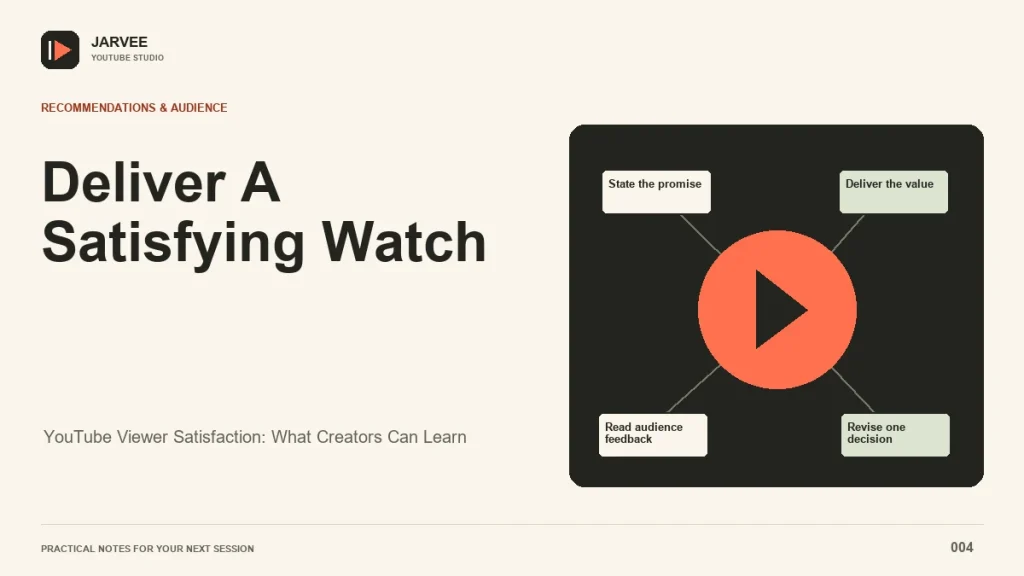
A viewer can watch a video for a long time and still wish they had chosen something else. They may have waited for an answer that never arrived, struggled through an unclear demonstration, or discovered that the title exaggerated the result. Viewer satisfaction asks a broader question than whether the video managed to occupy time.
Creators cannot open Studio and read a universal hidden satisfaction score that explains every recommendation. Nor can they infer a survey result from a single retention graph. The practical opportunity is closer to the editing desk: set an honest expectation, deliver a worthwhile experience, and learn from the feedback viewers actually provide.
Separate the public explanation from speculation
YouTube is Google’s video platform. Its recommendation system is not operated by Meta, and creator advice should not borrow explanations from a different company’s products. YouTube’s own overview of recommendations discusses viewer feedback, including satisfaction surveys, among the signals used to understand what people value.
That does not reveal a formula you can reverse engineer from your dashboard. A viewer survey and an audience retention report measure different things. You may see a change in recommendations without seeing the underlying reasons for individual viewers. Treat claims about precise survey weights, universal satisfaction gates, or guaranteed recovery tactics as unsupported unless the platform documents them.
The site’s guide to understanding YouTube recommendations is useful context, but a creator’s production choices should remain grounded in their own audience and subject. A calm, complete explanation can satisfy a technical audience. A tense narrative can satisfy an entertainment audience. Fast cutting is a style choice, not a universal definition of value.
Define what a satisfying result looks like
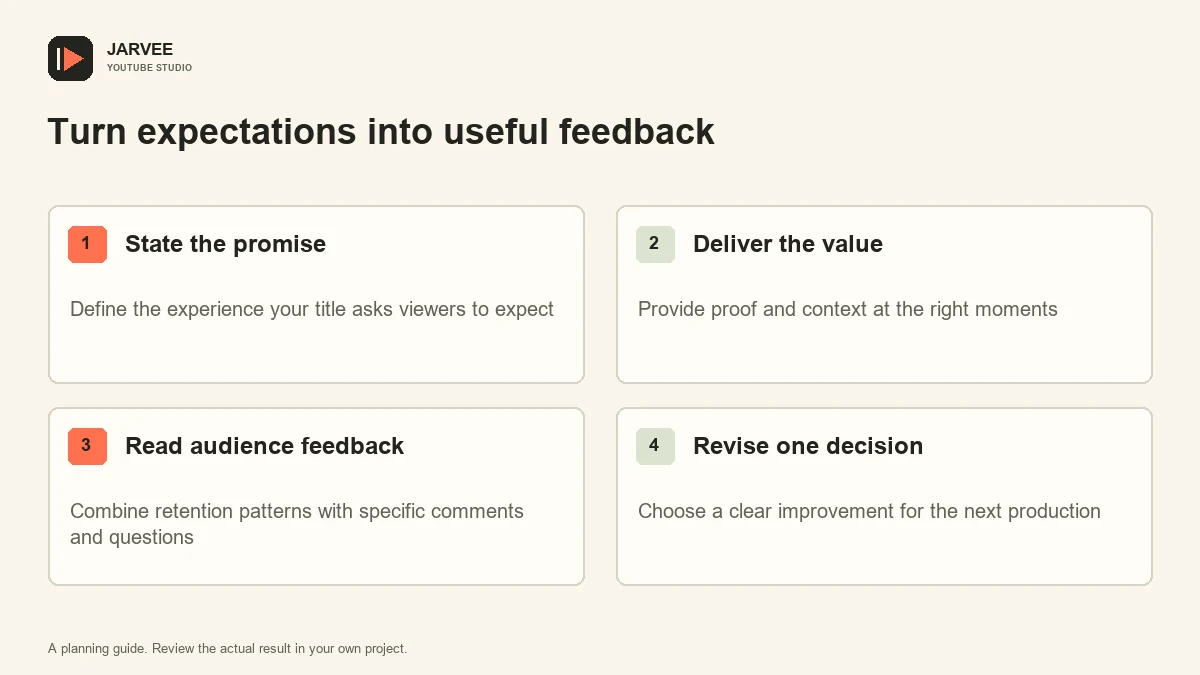
Before scripting, finish the sentence “After watching this, the viewer should be able to…” or “After watching this, the viewer should feel…” A tutorial might enable someone to diagnose a common issue. A historical essay might help someone understand why two credible accounts disagree. A comedy sketch might promise a particular kind of surprise rather than a practical lesson.
Keep the result specific enough to test. “Learn everything about photography” gives the production no sensible boundary. “Understand why the background stays blurry in this portrait setup” gives you a demonstration, a limitation, and a clear endpoint. Scope protects viewers from an overpromised title and protects the creator from an outline that keeps expanding.
List the evidence required to earn the result. If you compare methods, show comparable conditions. If you tell a story, establish the stakes and resolve the central question. If an important uncertainty remains, say so. A satisfying explanation can include uncertainty when viewers understand what is known, what is inferred, and what they should check in their own situation.
Audit the promise from packaging to ending
Read the thumbnail, title, and first spoken sentences as one invitation. Ask a colleague who has not seen the edit what they expect to receive. Their answer may expose a mismatch that is invisible to the person who wrote the script. Fix the promise or the video while you can still make a meaningful change.
During the edit, distinguish useful anticipation from avoidable delay. Showing the problem before the solution can create needed context. Repeating that a big reveal is coming without adding information consumes trust. Move background material to where it becomes relevant, and remove introductions that serve the creator’s habit more than the viewer’s understanding.
At the end, answer the central question before requesting another action. A next-video recommendation can extend the benefit, but it should not withhold the result that attracted the viewer. Someone who leaves after receiving a complete answer may still have had a good experience. Do not define every departure as a creative failure.
Read feedback without turning it into a verdict
Retention can identify moments worth inspecting, but the line does not explain motive. A repeated section may be fascinating or difficult to understand. A dip may reflect an irrelevant tangent, a viewer skipping ahead, or the completion of a task. Rewatch the moment and compare comments before deciding which explanation fits.
Look for specific feedback rather than counting only praise. “I could finally see where the cable connects” identifies a useful visual choice. “Which version are you using?” may reveal missing context. “This did not answer the title” points toward a promise problem. Save those observations in a production notebook with the relevant timestamp and the change they suggest.
Avoid treating the loudest commenter as the whole audience. Some viewers never comment, and some comments concern a different need from the video you intended to serve. Group recurring themes, then compare them with the video’s purpose. A clear boundary is often better than trying to satisfy every possible request inside one upload.
Use a practical editorial experiment
Consider an illustrative tutorial on organizing digital photographs. The original opening spends time describing the creator’s entire backup history. Viewers ask when the folder demonstration begins. For the next tutorial, the creator opens with a small before-and-after example, states the limited goal, and introduces the backstory only when it explains a decision.
The review should ask whether viewers understood the method and whether the early material now earns its place. It should not claim that one edit caused an invisible satisfaction score to rise. Several changes in audience, timing, and topic may occur together. Our guide to choosing useful content ideas can help translate recurring questions into a better next lesson.
Where a team already uses SMTasker for supported YouTube device workflows, its sources, schedules, limits, and logs can help document operational activity separately. Those records do not reveal viewer survey answers or measure genuine satisfaction. Keep creative evaluation centered on real audience responses and the work the video promises to do.
The most useful satisfaction review ends with a concrete production decision: show a comparison more clearly, state a limitation sooner, remove a repeated explanation, or complete the promised answer. Each choice is understandable without inventing a ranking formula. Over time, that discipline builds a channel viewers can trust to respect their attention.
Invite focused feedback when you need it. Asking which step was hardest to follow can produce more useful answers than asking whether the video was good. Read the responses with curiosity, explain corrections when needed, and use the next upload to demonstrate that the channel listens. The relationship matters beyond any individual graph.
KEEP EXPLORING
Put the workflow in context.
See the five YouTube tools available in SMTasker and choose the actions that fit your account.
Explore the tools